Training Puppy the First Week
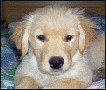
Every interaction with your puppy is a training opportunity.
Training a puppy when you first bring them home is critical. It is obvious that you need certain physical items such as a dog bed or crate, food and water bowls, puppy chow, collar, leash, toys, etc. Equally as important, all family members must decide and agree on routine, responsibility and rules.
The first few days are extremely important. Enthusiasm and emotions are up. Everyone wants to feed the puppy, play with the puppy and hold the puppy. Pre-established rules are easily broken. Everyone agreed that puppy will sleep in her crate but as soon as she's home, someone melts and insists that puppy will sleep in bed. Everyone previously agreed not to let puppy jump up on them, but in the excitement, no one even notices that puppy is jumping up. No one sleeps the first night. Puppy wins and gets to sleep in bed. The next morning we find puppy has eliminated all over the bed. So the following night puppy is banned to her crate and screams all night. No one sleeps tonight either.
Grouchiness sets in; enthusiasm is down. No one wants to get up at the pre-agreed upon early morning feeding time. Who will be responsible for house training the puppy? How are we going to sleep with her constant whining and crying?
Your new puppy has just been taken away from her mom and littermates. She is vulnerable and impressionable. What she needs now is security and routine.
Play with her quietly and gently. Don't flood her with attention and activity. If she looks like she wants to sleep, leave her alone. Puppies need lots of sleep.
Decide who is responsible for feeding and cleaning up after her. Don't deviate from the schedule. Routine is especially important for your puppy. Don't spend all your time with her. If she is going to be alone during the day or night, she needs to start getting used to it now. If she wakes up from a nap and whines, resist the urge to run in and comfort her.
Since puppies are so impressionable, it is important to begin explaining the rules right away. Don't give her special license to get away with anything just because she is a puppy. If you allow her to have her way about certain things now, she will only be confused later when you decide to change the rules. Puppies learn very quickly with proper instruction.
Never hit your puppy or give harsh reprimands. They don't mean to misbehave - they are just doing whatever comes naturally. Instead, show your puppy what kind of behavior you want. Teach her to play with her toys. Make them fun and exciting. Let her know how happy you are and how good she is when she chews them.
Then, when you see her chewing your furniture, firmly tell her, "Off!" and immediately show her one of her own toys. Encourage her to play with and chew on it. Praise her profusely when she does so. If you don't catch her in the act, anything you do will confuse her. The only way you can instruct your puppy is to be there. If you can't be there, don't allow her to have access to places where she can get into trouble.
Schedule an appointment with your veterinarian immediately. Discuss your puppy's vaccination schedule and when she will be allowed outside. Puppies are susceptible to many canine diseases until they are fully vaccinated; so don't take your puppy outside until your veterinarian says it is OK.
Your puppy's emotional and mental health is just as important as her physical health. When your schedule your puppy's first veterinary visit, also schedule her into a puppy socialization class. She may not be able to attend yet, but reserve your place now so you don't miss out. Puppy socialization classes give your puppy an opportunity to meet a variety of people and dogs in a controlled situation and have a chance to just romp and play with other young puppies.
Training Puppy the First Week
Recommend this webpage... share with friends !Read these articles for detailed info on raising your new pup!

^ Top of Page