Dog and Puppy Chewing Problems
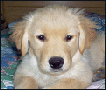
Puppy Tearing Things Up ?
Puppy chewing and generally destroying stuff is as normal for puppies as tail-wagging. If you have a puppy, expect chewing. Provide your pup with his own toys and teach him to use them or he will destructively chew anything available, such as your furniture, carpet, clothing or shoes.
Dogs do not chew and destroy your house and belongings because they are angry, jealous or spiteful. They do it because they are puppies. They may be lonely, bored, frustrated or anxious, but they are not malicious, vindictive or petty.
Active puppies can become restless when left alone for long periods. If you always come home at a certain time and you are late, your puppy may become anxious. Your puppy does not punish you for being late by destructive chewing. The puppies' chewing is a form of occupational therapy to relieve stress and release energy.
If you come home and find that your puppy has destroyed something, do not punish the puppy.
Passive Training to Prevent Chewing Problems
Until your puppy can be trusted not to destroy your home and yard, do not give him free, unsupervised run of your house. Give him a pleasant area or room of his own where he can enjoy himself and relax when you are not home or are unable to supervise him.
Literally litter his room with a wide variety of toys. Since he will have no other choice of things to chew, he will learn to chew and play with his own toys. Make the toys enticing. Soak rawhide and long marrow bones in different flavored soups. Let them dry and give a different flavor to the puppy each time you leave him alone.
Sterilized marrow bones and Kong toys can be stuffed with liver treats or cheese. The puppy will be entertained for hours trying to extricate the treats from the toy. You could also bury these toys in a digging pit.
Active Training to Prevent Destructive Chewing
When you are home, take time to teach your puppy to play with her toys and to seek them out whenever she feels like chewing. Always lavish your puppy with praise every time you see her playing with or chewing on one of her toys.
Teach your puppy to "find" her toys. Scatter several toys in different rooms throughout the house. Tell her to "find it," then immediately lead her from room to room encouraging her to pick up a toy when she sees one. When she does so, reward with praise, affection, play and even a food treat, then continue the game.
Anticipation Chewing
Most destructive chewing occurs just before the owner returns home. The puppy is anxiously anticipating the owner's return and this energy is released by chewing.
You can prevent your puppy from indiscriminately chewing whatever is handy and instead chew her own toys. Whenever you return home, insist that your puppy greet you with a toy in her mouth.
At first you will have to help her by telling her to "find" her toy. Do not give your usual home coming greeting until she has a toy firmly in her mouth. Within a few days, your puppy will realize that you never say hello unless she has a toy in her mouth.
Now when your puppy starts anticipating your return, she will automatically begin looking for a toy with which to gain your greeting and approval when you do return. If a toy is already in her mouth, she will be likely to chew on it, rather than on the furniture, to release tension.
Dog and Puppy Chewing Problems
Recommend this webpage... share with friends !These articles may also be of interest...
^ Top of Page